



We only make solid wood windows and doors-No Vinyl, Aluminum Clad or Composite materials. Learn more about the differences when selecting the right material for your project.
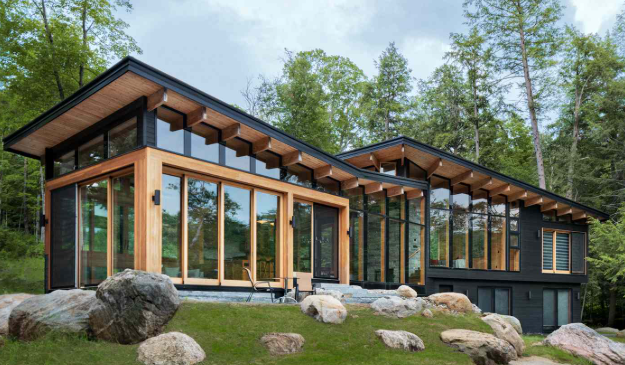
Choosing exterior windows and doors is not simply a color or maintenance decision. The material affects a building’s appearance, thermal performance, durability, repairability, and long-term value.
Vinyl, aluminum, fiberglass, composite, and wood all have a place in construction. But when a residential or commercial project calls for true design flexibility, authentic character, and a premium finished result, properly specified wood windows and doors offer advantages that other materials cannot fully match.
The Value of a Real Wood Window or Door
Wood is a naturally insulating material with a warm, substantial feel. It can be shaped, joined, repaired, and finished in ways that allow architects, builders, and owners to create openings that suit the building—not force the building to suit a limited product line.
For projects where windows and doors are part of the architecture, not just an opening in the wall, that distinction matters.
A well-made wood window or door provides:
- Natural thermal resistance compared with highly conductive metal frames
- Deep, refined profiles and true divided-light details
- Nearly unlimited customization in size, shape, species, finish, and hardware
- A finish that can be renewed instead of requiring complete replacement
- A material that suits both historic restoration and contemporary architecture
Wood vs. Vinyl
Vinyl is often selected for its accessible price and low-maintenance reputation. It can be an appropriate option for standard replacement applications. However, vinyl is limited when a project requires custom proportions, large openings, narrow sightlines, specialty shapes, or a rich architectural finish.
Vinyl frames are typically bulkier, and their color and profile options are limited by the material itself. Dark finishes can also introduce more heat exposure, while a damaged vinyl frame cannot be sanded, repaired, or refinished in the same way as wood.
Wood provides a more substantial and tailored result. It can be stained to reveal the grain, painted in virtually any color, or refinished years later as the building evolves. For custom homes, historic properties, boutique hospitality, and high-end commercial spaces, wood delivers the depth and permanence that vinyl cannot replicate.
Wood vs. Aluminum
Aluminum is strong, lightweight, and widely used in commercial storefront and curtain-wall systems. Its primary challenge in window and door applications is thermal conductivity: aluminum naturally transfers heat and cold much more readily than wood.
Modern thermally broken aluminum systems can improve performance, but they add complexity and cost. For projects prioritizing a warm interior surface, strong insulation values, and an authentic material expression, wood has a clear advantage.
Wood frames provide natural insulation while offering richer visual depth. They are especially well suited to residential projects, hospitality spaces, passive-minded construction, and commercial environments where the interior experience matters as much as the exterior facade.
Wood vs. Aluminum-Clad
Aluminum cladding is often presented as the easiest answer for an exterior window or door: a wood interior, a metal exterior, and less routine refinishing. But the performance of an aluminum-clad product depends on much more than the metal skin.
The key question is: what is underneath the cladding?
Many aluminum-clad window and door systems use a softwood or engineered wood core, often selected for cost efficiency and paint-grade appearance rather than long-term exterior durability. The aluminum exterior can conceal that core, but it does not change the nature of the wood behind it. When moisture reaches seams, fastener locations, glazing interfaces, or damaged areas, deterioration can begin behind the cladding and may remain hidden until it becomes a larger repair issue.
Not every aluminum-clad system is built the same, and a high-quality clad product can perform well when properly designed, installed, and maintained. However, buyers should verify the actual wood species, core construction, cladding attachment method, drainage design, and warranty—not simply assume that an aluminum exterior guarantees a longer-lasting window or door.
A solid wood system offers advantages that clad systems cannot always provide:
- Visible, repairable material: Wood can be inspected, sanded, repaired, refinished, and renewed over time.
- No concealed wood core: The exterior wood is the structural and finish material—not a hidden component behind a metal shell.
- Natural thermal performance: Wood is naturally less conductive than aluminum, creating a warmer frame surface and supporting an efficient building envelope.
- Greater design freedom: Custom profiles, arches, divided lights, deep jambs, and distinctive architectural details are easier to achieve in real wood.
- A more authentic finish: Mahogany offers depth, grain, and richness that cladding cannot replicate.
Aluminum cladding can reduce exterior finishing requirements, but it should never be treated as a substitute for material quality. A low-cost wood core covered with aluminum may look protected on day one, yet its long-term performance depends on whether moisture ever reaches the concealed substrate.
Wood vs. Fiberglass and Composite
Fiberglass and composite products are valued for durability and relatively low maintenance. They can offer strong energy performance, but they generally imitate the appearance of wood rather than provide the real material.
For projects that need true custom craftsmanship, there is a difference between a wood-look surface and actual wood joinery. Wood allows for substantial muntins, curved and arched openings, custom pane layouts, distinctive sill and casing details, and seamless coordination with millwork, cabinetry, and doors.
Fiberglass and composite products can be practical choices for standardized applications. But when the design calls for a one-of-a-kind opening, wood offers greater freedom and a more convincing result.
Performance Depends on Craftsmanship
A quality wood window or door must be designed as a complete exterior system. Species selection, engineered construction, proper joinery, weather seals, glazing, drainage, finish, and installation all work together to determine long-term performance.
At Cypress Windows and Doors, we use premium wood species such as mahogany for exterior applications because of its stability, density, and refined grain. Combined with precision manufacturing, high-performance glass, quality hardware, and a durable finish system, wood becomes a high-performing building component—not simply a traditional material.
Better for Restoration, Better for Design
Wood is often the only material that can faithfully reproduce historic profiles, divided lights, arched heads, and custom proportions. It can preserve the character of a landmark home, brownstone, church, or institutional building while integrating modern glass and weather performance.
It is equally valuable in contemporary architecture. Large fixed picture windows, lift-and-slide doors, tilt-and-turn systems, and floor-to-ceiling glazed walls all gain warmth and architectural presence when framed in real wood.
A Long-Term Investment
The lowest initial cost is not always the lowest cost over the life of a building. A well-crafted wood window or door can be maintained, repaired, refinished, and updated rather than discarded when a surface is damaged or a style changes.
That repairability is one of wood’s greatest strengths. It gives owners a path to preserve and renew the original investment while retaining the architectural quality of the opening.
For projects where design, performance, and lasting value matter, wood windows and doors remain the material of choice. For homeowners, architects, and builders seeking an exterior window or door that can be maintained, repaired, and appreciated for decades, solid wood offers a more transparent and enduring solution.
Cypress Windows and Doors manufactures custom wood windows and doors in the USA for residential, historic, commercial, and high-performance projects. We help architects, builders, and homeowners create openings designed around the building—and built to last.